A single semi-truck can accumulate more than 50 pounds of road grime, diesel residue, and chemical buildup over a long haul. Multiply that across a fleet of 20 or 50 vehicles and you start to understand why commercial washing operations are a serious infrastructure decision, not just a maintenance afterthought.
Getting the equipment wrong is expensive. Underpowered machines struggle with heavy soiling, slow down turnaround times, and burn out faster under continuous use. Overspending on the wrong features creates budget problems without adding real productivity. The right fleet pressure washer sits squarely between those two failure points.
This guide covers how to identify that point for your specific operation.
Why Fleet Washing Demands More Than Consumer or Light-Commercial Equipment
Standard pressure washers sold at hardware stores are built for intermittent residential use. Fleet operations are categorically different. You’re dealing with continuous daily use, heavy contamination loads, and the need for consistent performance shift after shift.
A few realities that shape equipment selection at the fleet level:
- Duty cycle: Industrial machines are rated for continuous operation. Light-commercial units typically aren’t, and will fail quickly under the thermal and mechanical stress of washing 10+ vehicles per day.
- Flow rate matters as much as pressure: A truck wash pressure washer needs high GPM (gallons per minute) to rinse efficiently. Pressure (PSI) breaks down soiling; flow rate carries it away. Most fleet applications need at least 4–5 GPM, often more.
- Water temperature: Cold water alone struggles with diesel fuel residue, grease, and road tar. Hot water washers dramatically reduce chemical consumption and cut cleaning time significantly.
The EPA has noted that diesel particulate matter and road salt are among the most stubborn surface contaminants on commercial vehicles. That fact alone points toward heated, high-flow equipment for any serious operation.
Key Specifications to Evaluate
Pressure Rating (PSI)
For fleet and truck washing, the useful working range is generally 2,000–4,000 PSI. Going much higher than that on painted surfaces risks stripping markings and damaging seals. Most experienced operators find that 2,500–3,000 PSI with high flow rate outperforms a 4,000 PSI unit with low GPM every time.
Flow Rate (GPM)
A higher GPM means faster rinsing and less time per vehicle. For a trucking company operating 20+ vehicles daily, even a 30-second reduction per wash adds up to hours per week. Aim for a minimum of 4 GPM; larger operations often spec 5–8 GPM units.
Hot Water vs. Cold Water
Hot water units (typically heating water to 180–200°F) are the standard for serious fleet washing. They cut grease and oil-based contamination far more effectively than cold water, and they reduce detergent usage, which matters for both cost and wastewater compliance.
Fuel Type
Electric, diesel, propane, and natural gas units all have their place. For outdoor or remote wash bays without reliable electrical infrastructure, diesel or propane burners are common. Electric units work well in enclosed heated facilities with adequate power supply.
Frame and Build Quality
Continuous-use equipment takes a beating. Look for commercial-grade frames, stainless steel or brass fittings, and burner systems built for duty cycles of 1,000+ hours annually. Machines assembled for the industrial market rather than retail channels hold up meaningfully better over a 5–10 year ownership horizon.
Understanding the Equipment Landscape: Industrial Brands That Perform
Not all pressure washer brands target the same market. Several manufacturers have built strong reputations specifically in fleet, agriculture, and industrial cleaning contexts.
Hotsy Pressure Washers are widely respected in fleet and commercial washing. Hotsy has been manufacturing industrial cleaning equipment for decades, and their hot water units are a common sight in truck wash bays and municipal fleet facilities across North America. Their machines are built for high duty cycles, and dealer service networks are generally strong, which matters a great deal when a machine goes down mid-shift.
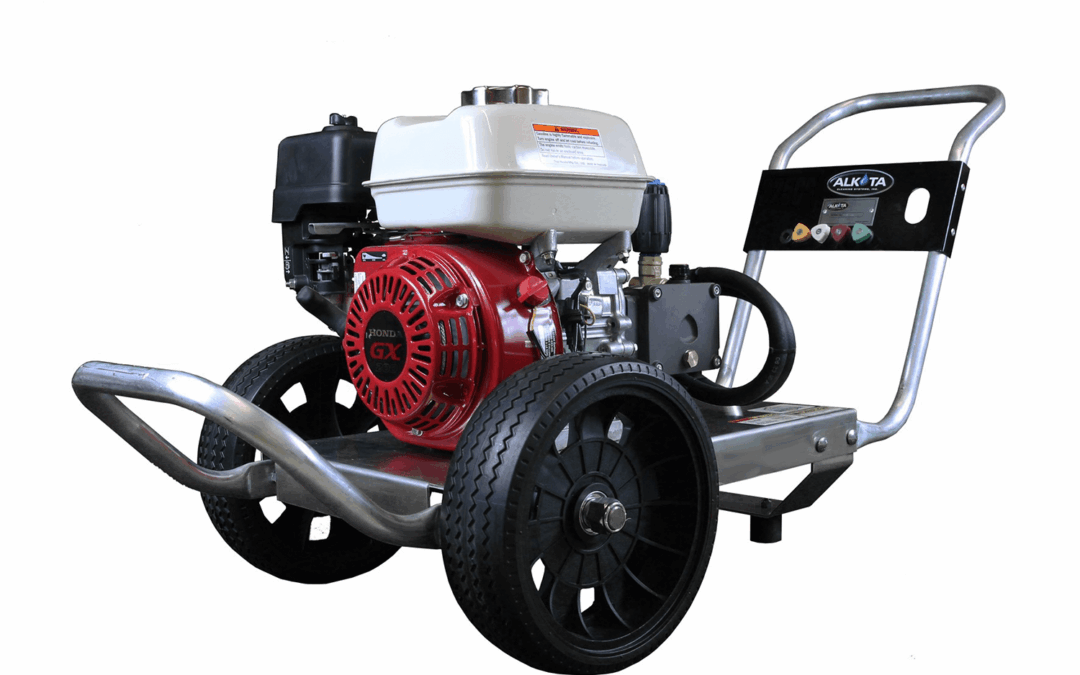
Alkota High Pressure Cleaning Equipment is another brand worth examining for fleet applications. Alkota manufactures heavy-duty hot water and cold water pressure washers built for demanding commercial environments. Their units are known for robust construction and are well-regarded in industries like agriculture, transportation, and construction where equipment faces continuous stress.
When evaluating any industrial brand, ask about parts availability, local service support, and warranty terms on the burner assembly. These factors often matter more than the initial purchase price over a 5-year ownership window.
Matching Equipment to Your Operation Size
A pressure washer for a trucking company running 5 vehicles looks very different from one built for a 100-unit fleet with dedicated wash bay staff.
Small fleets (under 10 vehicles): A single hot water unit in the 3,000 PSI / 4 GPM range, mounted on a cart or portable skid, can handle daily washing without major infrastructure investment. Portability is often a real advantage at this scale.
Mid-size fleets (10–40 vehicles): Fixed or semi-fixed wash bay installations start to make sense. This is where plumbed water supplies, reclaim systems, and wall-mounted reels become worthwhile investments. Units in the 3,000–4,000 PSI / 5–8 GPM range with high-output burners are common at this scale.
Large fleets and commercial truck washes: Operations washing 40+ vehicles daily typically look at stationary systems with multiple wash wands, automated components, and dedicated reclaim/recycling systems to manage water consumption and wastewater compliance. The equipment investment is significant, but so are the operational efficiencies at scale.
Chemical Injection and Detergent Systems
Detergent use is inseparable from fleet washing performance. Most industrial pressure washers support downstream or upstream chemical injection. Understanding the difference matters.
- Downstream injection draws chemical after the pump, which protects pump internals but dilutes the solution more. It works well for general degreasing and wash-down.
- Upstream injection introduces chemical before the pump and delivers a stronger concentration at the nozzle. It requires chemicals rated as pump-safe, but it’s more effective on heavy soiling.
For truck washing, purpose-formulated truck wash detergents and degreasers, combined with the right injection system, reduce scrubbing time considerably. That’s where much of the real efficiency gain comes from in a fleet washing operation.
Wash Bay Setup and Water Management
The pressure washer itself is only part of the system. Wash bay design has a significant impact on productivity and regulatory compliance.
Most municipalities require commercial vehicle wash water to be treated before it enters the storm drain or sewer system. A reclaim or recirculation system isn’t just an environmental consideration; in many jurisdictions it’s a legal requirement. Factoring that into the total cost of a fleet washing setup is important from the start.
A well-configured wash bay also includes adequate lighting, non-slip flooring, water supply at the correct flow rate to feed the machine without pressure drop, and ergonomically placed hose reels. These aren’t optional extras; they directly affect how fast and thoroughly vehicles get cleaned per shift.
For operators building or specifying a complete fleet washing setup, High PSI provides industrial cleaning equipment and expertise suited to commercial and fleet washing environments, covering both equipment selection and application guidance.
Key Takeaways
- Match your pressure washer to your actual duty cycle. Fleet washing requires industrial-grade equipment rated for continuous operation, not light-commercial units.
- Prioritise flow rate alongside pressure. High GPM is what makes large vehicle washing fast and efficient at scale.
- Hot water units are almost always the right choice for fleet and truck washing. They outperform cold water on grease and diesel residue, reduce chemical use, and speed up per-vehicle wash time.
- Brand and service network quality matter as much as specs. Equipment downtime in a fleet wash operation is a direct operational cost.
- Account for wash bay infrastructure and water management from the start. The pressure washer sits inside a larger system that needs to be compliant, efficient, and practical.
Frequently Asked Questions
What PSI is recommended for washing semi-trucks and commercial vehicles? Most operators find 2,500–3,500 PSI with a high flow rate of at least 4–5 GPM to be the effective working range for commercial truck washing. Higher PSI can be useful for undercarriage work, but should be used carefully on painted surfaces and seals to avoid damage.
Is a hot water pressure washer worth the extra cost for fleet use? For most fleet applications, yes. Hot water units cut through diesel residue, grease, and road film significantly faster than cold water, reducing per-vehicle wash time and detergent consumption. Over hundreds of wash cycles annually, the efficiency gains typically justify the higher upfront cost.
How often should fleet vehicles be washed? It depends on operating conditions, but most commercial fleets on road or construction duty benefit from weekly washing as a minimum. Vehicles operating in winter with road salt exposure should ideally be washed more frequently to prevent corrosion. A reliable, fast wash setup makes higher frequency practical.
What’s the difference between a portable and a stationary fleet pressure washer setup? Portable units on skids or carts offer flexibility and work well for smaller fleets or operations without dedicated wash bays. Stationary setups are plumbed in, often have higher capacity, and work better for high-volume daily washing. For fleets over 15–20 vehicles, a fixed installation usually pays off in speed and reliability.
Do I need a water reclaim system for a commercial fleet wash operation? In most areas, yes. Wash water from commercial vehicles contains oils, heavy metals, and other contaminants subject to local discharge regulations. A reclaim system captures and filters that water before disposal or reuse, keeping the operation compliant and reducing water costs over time.
Conclusion
Choosing the right fleet pressure washer isn’t a single decision; it’s a system-level one. The machine, the wash bay setup, the water management, the chemical program, and the service infrastructure all interact. Getting the pressure washer right while ignoring the surrounding infrastructure means leaving performance on the table.
The best approach is to start with your operational reality: how many vehicles, how dirty, how often, and what your facility can support. Work outward from there to spec equipment that fits that context rather than buying on spec sheets alone.
A good dealer with genuine industrial expertise can bridge the gap between specification and real-world performance. That knowledge is worth seeking out before committing to any major equipment purchase.