Choosing the wrong pressure washer for a heavy-duty industrial environment does not just mean poor cleaning results. It means downtime, costly repairs, and equipment that gets replaced far sooner than it should. When the stakes are that high, brand selection matters.
Two names consistently come up in industrial cleaning conversations: Hotsy and Alkota. Both have decades of history, both build hot water units capable of serious commercial and industrial work, and both attract loyal followings among equipment managers, fleet operators, and facility professionals. The challenge is that they are not interchangeable, and what makes one brand the right fit for a particular operation can make the other a poor choice.
This comparison breaks down where each brand excels, where each falls short, and how to match the right machine to your actual cleaning demands.
What Both Brands Actually Do Well
Before getting into differences, it helps to acknowledge what Hotsy and Alkota share: a genuine commitment to hot water cleaning performance.
Hot water pressure washers consistently outperform cold water units on grease, oil, and biological contaminants. According to the Pressure Washer Manufacturers’ Association, hot water units can reduce cleaning time by up to 50% compared to cold water equivalents when dealing with petroleum-based soils. Both brands understand this and design machines built for sustained, demanding use rather than occasional light-duty jobs.
Neither brand is a budget option. If price is the primary driver, you are already looking in the wrong category.
Hotsy: Scale, Support Network, and Versatility
Hotsy is one of the largest pressure washer brands in North America. That scale translates into a few concrete advantages that are easy to underestimate until you actually need them.
Dealer Coverage and Service Access
Hotsy operates through an extensive dealer network, with hundreds of authorised service locations across the continent. For operations spread across multiple sites, or for businesses that cannot afford extended downtime, proximity to a service centre is a practical concern, not a minor detail.
Parts availability is consistently cited as a Hotsy strength. Because so many units are in service, replacement components are widely stocked, and turnaround on repairs tends to be faster than with less common brands.
Product Range and Customisation
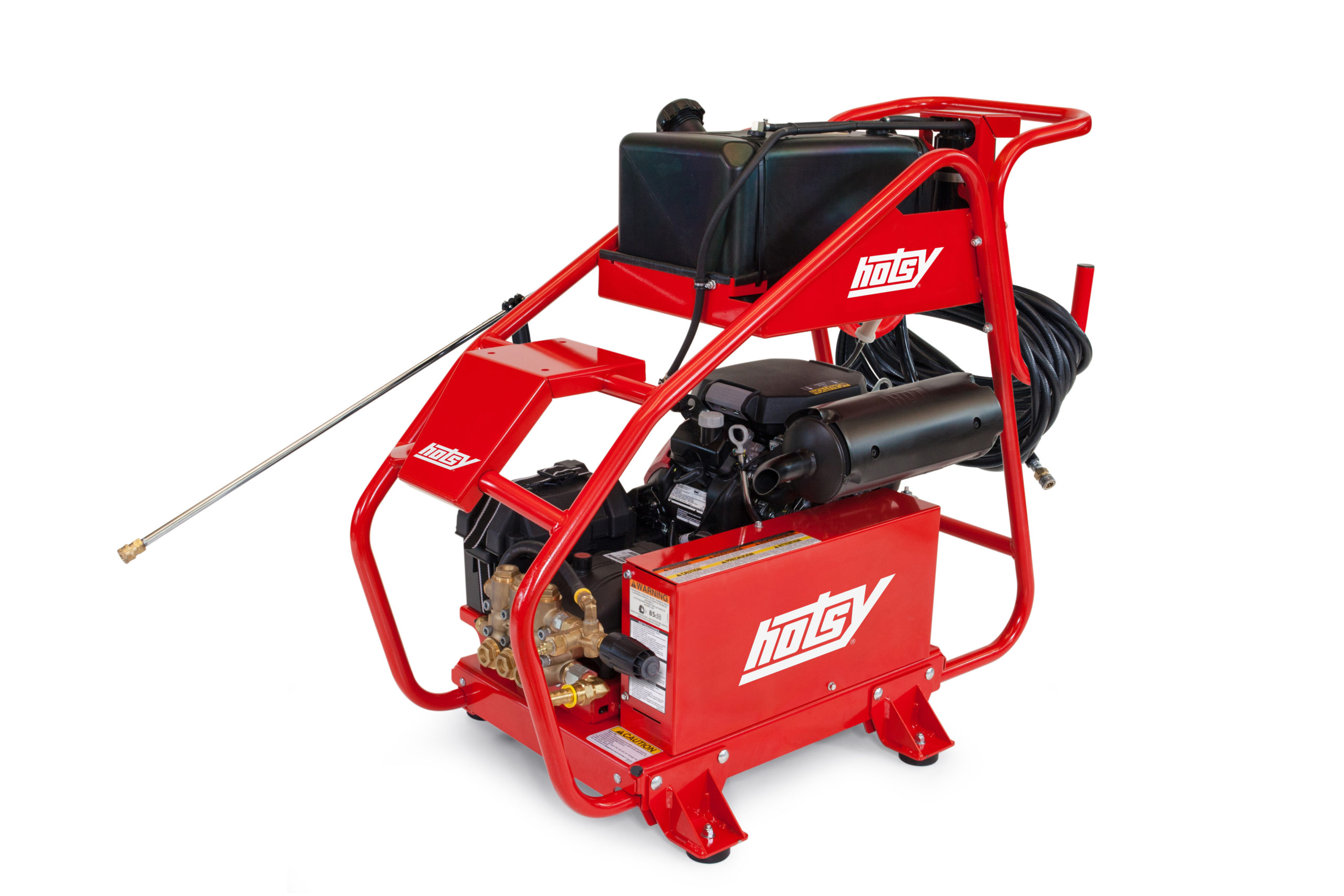
The Hotsy lineup covers an unusually broad range of configurations: stationary and portable units, electric and gas or diesel-fired burners, trailer-mounted systems, and custom skid builds. For operations with varied cleaning requirements across departments or locations, this depth makes it easier to standardise on a single brand without compromising on fit.
Hotsy Pressure Washers are well-regarded in industries like food processing, agriculture, automotive, and municipal services, partly because the range is wide enough to address the specific demands of each environment.
Build Philosophy
Hotsy machines are built around reliability and ease of service. The designs are not always the most compact or the most innovative, but they hold up under sustained use and are straightforward to maintain by in-house technicians with moderate training.
Alkota: Durability-First Engineering for Demanding Environments
Alkota is a smaller, US-based manufacturer with a reputation built specifically on toughness. The brand does not try to compete across every segment. Instead, it focuses on building machines that perform reliably in the harshest industrial conditions.
Heavy-Duty Construction Standards
Alkota machines are built with stainless steel frames and heavy-gauge components as standard, not as premium upgrades. The coil systems are designed for high-cycle use in environments where machines run for extended hours rather than occasional jobs. This shows up in longevity data across industrial users, particularly in mining, oil and gas, agriculture, and manufacturing sectors.
The brand’s direct-drive pump systems are engineered for consistent output under load, and the burner assemblies are designed to handle fluctuating water quality without the kind of fouling issues that can affect less robustly built machines.
Specialised Performance Over Broad Range
Where Hotsy’s strength is breadth, Alkota’s is depth. The range is narrower, but the machines within it are purpose-built for serious industrial work. If the cleaning environment involves extreme contamination, continuous operation, corrosive conditions, or heavy particulate in the water supply, Alkota’s engineering priorities become directly relevant.
Alkota High Pressure Cleaning Equipment is a particularly strong fit for operations in rural or remote locations where dealer proximity matters less but machine resilience matters more. These units are designed to be maintained on-site with less frequent service intervals when operated correctly.
The Trade-off: Support Infrastructure
The flip side of Alkota’s focused approach is a smaller dealer and service network. Parts can take longer to source depending on location, and finding certified technicians outside major industrial centres requires more planning. For operations that are geographically isolated but have capable maintenance staff, this is manageable. For urban facilities that rely heavily on dealer support, it is worth factoring in seriously.
Side-by-Side: Key Comparison Points
Here is a direct look at how the two brands compare across the factors that matter most in an industrial purchasing decision:
| Factor | Hotsy | Alkota |
|---|---|---|
| Dealer/service network | Extensive across North America | More limited, concentrated in industrial regions |
| Build materials | Durable, service-focused design | Stainless steel, heavy-gauge as standard |
| Product range | Very broad, highly configurable | Narrower but purpose-built |
| Suited industries | Food service, agriculture, auto, municipal | Mining, oil and gas, heavy manufacturing, remote ops |
| Parts availability | Widely stocked, fast turnaround | Longer lead times depending on location |
| Long-term durability | Very good | Excellent in demanding conditions |
| Price point | Mid to premium | Premium |
How to Decide: Questions Worth Asking Before Purchasing
Neither brand is universally better. The right choice comes down to operational reality. Ask these questions before committing:
How far are you from a service centre? If you are within reasonable distance of a Hotsy dealer, the support infrastructure advantage is real and valuable. If your operation is remote, Alkota’s durability-first design reduces your reliance on that network.
How many hours per day will the machine run? Light-to-moderate use environments get excellent results from Hotsy. High-cycle, continuous-use applications tend to favour Alkota’s construction approach.
What are you cleaning? For food processing environments, sanitation compliance, and varied organic soils, Hotsy’s versatility and NSF-certifiable accessories are an advantage. For heavy petroleum contamination, industrial machinery, or equipment with extreme fouling, Alkota’s sustained heat output and robust coil systems perform exceptionally.
What is your maintenance capability? If in-house maintenance is limited and you rely on dealer service, Hotsy’s network is a meaningful practical advantage. If your team can handle technical maintenance and you have the setup to support it, Alkota’s simpler service requirements at the machine level work in your favour.
The team at High PSI works across both brands and can help match a specific machine spec to an operation’s actual cleaning load, which is often the most useful step before purchasing at this level.
Key Takeaways
- Hotsy offers a broader product range and a larger North American dealer network, making it a strong choice for operations that need flexible configurations and reliable service access.
- Alkota builds to a higher standard of material durability by default, making it well-suited to continuous-use, heavy-industrial, or remote environments.
- Dealer proximity and in-house maintenance capability are often the deciding factors between the two brands, not cleaning performance alone.
- Both brands are premium-tier investments. Choosing based on price alone typically leads to the wrong outcome in either direction.
- Understanding the specific contamination type, daily run time, and site conditions narrows the decision considerably before any comparison shopping begins.
Frequently Asked Questions
Is Hotsy or Alkota better for a food processing facility? Hotsy tends to be the stronger fit for food processing environments. The brand’s accessories are often compliant with NSF and food-safety standards, and the dealer network makes routine service and certification requirements easier to manage. Alkota can work in these settings but is more commonly specified for industrial manufacturing contexts.
Which brand lasts longer? Both brands are built to last well beyond typical consumer or light-commercial units. In the most demanding conditions, particularly continuous high-temperature operation in abrasive environments, Alkota’s heavier-gauge construction tends to show lower wear over time. In moderate industrial use, the difference is less pronounced.
Can I get parts for Alkota quickly? This depends heavily on location. In regions with strong industrial dealer coverage, lead times are reasonable. In more remote areas, sourcing specific components can take longer than with Hotsy. Having a small inventory of high-wear parts on-site is a common practice among Alkota users in isolated locations.
Are these brands suitable for rental fleets? Hotsy is more commonly used in rental fleet contexts, largely because of the dealer network, parts availability, and ease of training technicians on the units. Alkota units are used in some rental contexts but are more typically purchased for dedicated, site-specific operations.
What pressure and temperature ranges do both brands offer? Both brands produce units capable of operating in the 1,500 to 5,000 PSI range depending on configuration, with water temperatures reaching 250°F or higher on commercial units. The overlap in specifications is significant, which is why application context and operational support often matter more than raw spec comparison when choosing between them.
Conclusion
The hotsy vs alkota debate is really a question of operational fit, not brand loyalty. Both are credible, capable, and worth serious consideration at the industrial level. Hotsy suits operations that need range, flexibility, and ready access to dealer support. Alkota suits operations where maximum durability and heavy-duty construction matter more than a wide product catalogue.
Before purchasing either, spend time mapping the actual use case: run hours, contamination type, location, and maintenance capacity. That exercise usually makes the right choice clear without requiring an exhaustive brand comparison.