Choosing the right pressure washer for your industry is one of the most practical decisions you can make for your operation. The wrong unit costs you time, drives up operating expenses, and wears out faster than it should. The right one cleans efficiently, holds up under daily use, and pays for itself through reduced downtime and better results. This guide walks you through the key variables: hot water versus cold water, PSI and GPM, power source, portability, and how different industries match to different equipment types. By the end, you will have a clear framework for narrowing down your options and making a confident purchase decision.
Why Equipment Selection Matters More Than Most Buyers Realize
Most equipment failures and performance complaints trace back to a mismatch between the machine and the job. A cold water unit running a job that needs heat will never fully degrease. An underpowered pump will struggle and wear out fast trying to keep up with demand. An electric unit on a job site with no reliable power access creates constant delays.
Pressure washers serve a wide range of industries including agriculture, construction, food processing, fleet washing, manufacturing, and municipal work. Each has different cleaning challenges, operating environments, and regulatory requirements. Understanding what separates one machine from another is the first step to matching equipment to your actual needs.
Hot Water Versus Cold Water: The Most Important Decision
The choice between hot water and cold water is the single biggest variable in pressure washer selection. Getting this wrong affects cleaning results more than any other specification.
When Cold Water Is The Right Choice
Cold water pressure washers are well suited for jobs where the primary goal is removing dirt, mud, sand, and loose debris without the need to cut through grease or oil. They are simpler to operate and maintain, cost less upfront, and work reliably for applications like vehicle rinsing, concrete cleaning, and general surface washing where temperature is not a factor.
Common industries that rely on cold water units include agriculture for equipment rinsing, construction for site cleanup, and municipalities for sidewalk and surface cleaning. If grease and oil are not part of the cleaning challenge, cold water is usually the more economical starting point.
When Hot Water Is The Right Choice
Hot water pressure washers use heat to break down grease, oil, and biological contaminants far more effectively than cold water alone. The heat accelerates the chemical reaction between detergent and soil, which means shorter cleaning times, less detergent usage, and better results on heavily soiled surfaces.
Industries where hot water is typically essential include food processing and food service, fleet washing, manufacturing facilities, and any operation that deals with petroleum-based soils. If your cleaning tasks regularly involve engine grease, cooking residue, oil spills, or similar contaminants, hot water is the more productive and cost-effective choice over time even though the higher upfront cost.
Understanding PSI And GPM: Pressure And Flow Both Matter
PSI (pounds per square inch) measures the force of the water stream. GPM (gallons per minute) measures the volume of water delivered. Both matter, and focusing only on PSI is one of the most common mistakes buyers make.
Matching PSI To The Job
Higher PSI is not always better. Too much pressure on soft surfaces like wood, painted equipment, or certain coatings causes damage. Too little pressure on concrete, heavy equipment, or compacted soils leaves the job incomplete. As a general guide:
- Light commercial cleaning such as vehicles and equipment: 1,500 to 2,500 PSI
- Medium-duty work such as concrete, building exteriors, and fleet washing: 2,500 to 3,500 PSI
- Heavy industrial cleaning such as large machinery, industrial floors, and tank cleaning: 3,500 PSI and above
Why GPM Determines Cleaning Speed
GPM determines how quickly you rinse and how much surface area you cover per hour. A machine with high PSI but low GPM will hit hard but rinse slowly. For large surface areas or high-volume operations, adequate GPM is just as important as pressure. Most commercial and industrial applications benefit from machines rated at 3.5 GPM or higher to maintain productive cleaning rates.
The combined measure of PSI multiplied by GPM, sometimes called cleaning units, gives a more useful picture of a machine’s total cleaning power than either number alone. When comparing equipment, look at both specifications together rather than focusing on one.
Power Source Options And What Each Means For Your Operation
Pressure washers run on several power sources and each has trade-offs. High PSI Ltd. carries equipment across all major power configurations so you can match the right power source to your facility and workflow.
Electric Pressure Washers
Electric hot water pressure washers are well suited for indoor facilities with reliable power access. They produce no exhaust, which makes them the right choice for food processing plants, enclosed manufacturing facilities, and any application where ventilation is limited. Electric units are quieter, require less engine maintenance, and run consistently as long as power is available.
The limitation is portability. Electric units need a power source and are not practical for remote job sites or mobile operations without a generator. For fixed-location industrial cleaning, they are often the most efficient and cost-effective option.
Gas And Diesel Engine Pressure Washers
Gas and diesel engine units offer full portability and high output, making them the standard choice for mobile operations, construction sites, agriculture, and any application where electrical infrastructure is unreliable or unavailable. Diesel engine hot water units are common in heavy industrial and fleet washing applications where fuel efficiency and high run-time matter.
Diesel engines are generally more fuel-efficient and longer-lived than gasoline under continuous heavy use. Gas engines cost less upfront and are practical for lighter commercial use. Both require more engine maintenance than electric units but give you the freedom to clean anywhere.
Natural Gas And Oil-Fired Units
Natural gas pressure washers and oil-fired units are designed for fixed installations with high-volume, continuous use demands. They are common in car washes, food processing facilities, and large manufacturing plants where the machine runs many hours per day and fuel delivery infrastructure is already in place. These units offer lower fuel costs per hour compared to propane or gasoline and are built for high-duty-cycle environments.
Stationary Versus Mobile: Matching The Machine To Your Workflow
Where and how you use the machine determines whether a stationary or mobile setup makes more sense.
Stationary Units For Fixed-Location Operations
If your cleaning happens in the same location every day, a stationary unit with permanent plumbing and power connections delivers the most consistent performance and the lowest per-use cost. Facilities like food plants, wash bays, and manufacturing operations often benefit from a fixed installation that the team can access at any time without setup.
Trailer And Mobile Units For Field Operations
For operations that require cleaning at multiple sites or remote locations, pressure washer trailers and mobile skid units offer the right combination of output and portability. Trailer-mounted systems can carry large water tanks, run high-output machines, and support extended operation in the field without relying on local utilities. They are common in fleet washing, agricultural equipment cleaning, and contractor work.
High PSI also offers a custom trailer design service for operations that need a system built around their specific workflow, water supply, and equipment preferences.
Industry-Specific Guidance
Different industries have distinct cleaning demands. Here is a practical breakdown of how equipment selection typically maps to common sectors.
Agriculture
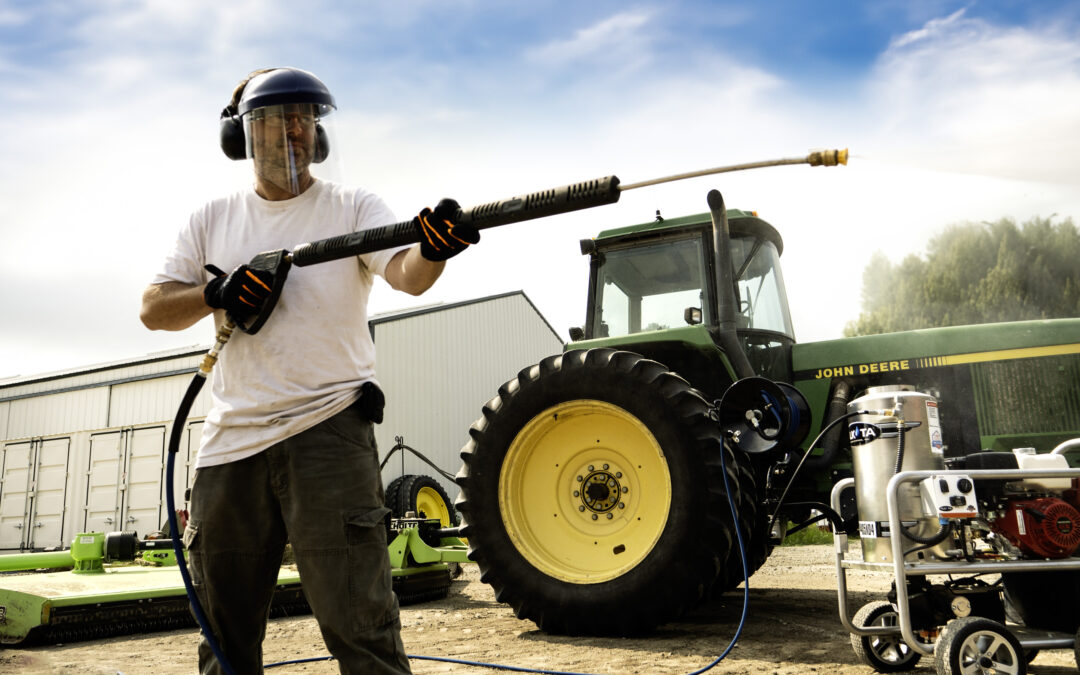
Agricultural operations deal with mud, manure, crop residue, and general equipment grime. Cold water units handle most rinsing tasks, but facilities with livestock or dairy operations often benefit from hot water for sanitation purposes. Portability and durability in outdoor environments are priorities. Diesel engine units are common for field use.
Food Processing And Food Service
Sanitation standards in food processing require hot water and compatible detergents to meet health code requirements. Electric hot water units are preferred for enclosed plant environments where exhaust is not acceptable. High GPM is important for fast turnaround between production runs. Detergent injection systems and appropriate cleaning chemicals are part of the full setup.
Fleet And Vehicle Washing
Fleet washing demands high volume and consistent throughput. Hot water is generally needed to cut road grime, oil film, and brake dust effectively. For large fleets, automated or semi-automated wash systems improve consistency and reduce labor cost. Mobile trailer units are common for fleets that operate across multiple yards or remote depots.
Construction And Contractors
Construction sites need portability above all else. Gas or diesel engine units that can move with the job are standard. Cold water handles most site cleanup, but contractors dealing with concrete forms, equipment degreasing, or paint prep often keep a hot water unit available. Durability and ease of service in rough environments are key selection criteria.
Manufacturing And Industrial Facilities
Manufacturing facilities often run pressure washers continuously and require high-duty-cycle machines built for sustained output. Hot water is standard for most industrial cleaning. Electric units are preferred where exhaust is not acceptable. Parts washers are also commonly used in manufacturing for component cleaning during maintenance operations.
Detergents, Accessories, And The Full System
A pressure washer alone is only part of the cleaning system. The right accessories and detergents extend capability and improve results.
Choosing The Right Detergents And Degreasers
Matching your detergent or degreaser to the soil type and surface material is as important as the machine specification. The wrong chemical can damage surfaces, leave residue, or fail to cut through contamination. Degreasers work on petroleum-based soils, specialty cleaners handle specific materials like aluminum or food residue, and sanitizers meet food-contact surface requirements. Using detergents designed for pressure washer injection also ensures proper dilution and consistent results.
Accessories That Expand Capability
Surface cleaners, undercarriage cleaners, hose reels, and specialty nozzles extend what a single machine can do. Surface cleaners improve coverage speed and consistency on flat areas like floors and parking lots. Undercarriage cleaners reach beneath vehicles without crawling under them. The right nozzle selection prevents surface damage and matches spray pattern to task. Investing in quality accessories matched to your applications improves both safety and efficiency.
Equipment Leasing, Financing, And Rentals
For operations that are not ready to commit to a full purchase, equipment leasing and financing options allow you to get the right machine in service without a large upfront capital outlay. Leasing also makes it easier to upgrade as your operation grows or cleaning demands change.
Short-term needs are covered through pressure washer rentals, which give you access to commercial-grade equipment for one-time projects, peak demand periods, or while your primary machine is being serviced. Rentals are a practical option for contractors, seasonal operations, and facilities that need occasional high-output cleaning without the cost of ownership.
Scheduled Maintenance And Service Support
Buying the right machine is only the first step. Keeping it running reliably over time requires scheduled maintenance and access to parts and service when problems arise. Machines that are maintained on a regular schedule last longer, hold pressure better, and fail less often during peak production periods.
High PSI Ltd. offers pressure washer service and repair from experienced technicians with an average of 20 years in the industry. Service trucks are stocked with parts to complete most repairs on the first visit, and the team handles warranty claims for the brands they carry. For operations that cannot afford extended downtime, having a reliable service partner close by is as important as the equipment itself.
Conclusion
Choosing the right pressure washer for your industry comes down to matching the machine to your cleaning challenge, not just buying the highest-rated unit available. Start with the hot versus cold decision, then set your PSI and GPM requirements based on real job conditions, choose a power source that fits your facility and mobility needs, and consider the full system including detergents, accessories, and service support. Whether you are running a food processing plant, a construction operation, a vehicle fleet, or a manufacturing facility, the right equipment makes every cleaning task faster, more consistent, and more cost-effective. Visit highpsi.com to explore the full product lineup or contact the team for a free consultation.
Not Sure Which Pressure Washer Is Right For Your Operation?
High PSI Ltd. has been helping businesses across Northern Illinois select and maintain the right cleaning equipment since 1976. Their team carries over 50 pressure washing systems in stock across hot water, cold water, electric, gas, and diesel configurations. Visit highpsi.com to learn more.
Frequently Asked Questions About Choosing A Pressure Washer
What is the difference between a hot water and cold water pressure washer?
Cold water pressure washers remove dirt, mud, and loose debris effectively but struggle with grease and oil. Hot water units use heat to break down petroleum-based soils and biological contaminants faster and more completely. Hot water is typically required for food processing, fleet washing, and industrial degreasing applications.
What PSI and GPM do I need for commercial or industrial cleaning?
Light commercial cleaning typically falls in the 1,500 to 2,500 PSI range. Medium-duty applications like concrete and fleet washing generally need 2,500 to 3,500 PSI. Heavy industrial work often requires 3,500 PSI or more. GPM is equally important for productivity. Most commercial applications benefit from 3.5 GPM or higher to cover surface area efficiently.
Should I choose an electric, gas, or diesel pressure washer?
Electric units suit fixed indoor facilities where exhaust is not acceptable and power is reliable. Gas units offer portability at a lower upfront cost for lighter commercial use. Diesel units deliver high output, fuel efficiency, and durability for heavy industrial or mobile applications. The right choice depends on your power access, portability needs, and duty cycle.
Do I need a trailer-mounted unit or will a stationary machine work?
Stationary units are the most efficient choice for fixed-location operations like wash bays, food plants, and manufacturing facilities. Trailer-mounted or mobile skid units are the right choice when cleaning happens across multiple locations or remote sites without reliable utility access. Custom trailer builds are also available for operations with specific water supply or equipment requirements.
How do I know when to use detergents with a pressure washer?
Detergents and degreasers improve results on grease, oil, food residue, and biological soils that water pressure alone cannot fully remove. Matching the chemical to the soil type and surface material prevents damage and improves cleaning efficiency. High PSI carries a full range of detergents and degreasers formulated for pressure washer use across a wide range of industries.
What ongoing maintenance does a commercial pressure washer need?
Commercial pressure washers require regular oil changes for both the engine and pump, filter cleaning and replacement, nozzle inspection, hose and fitting checks, and seasonal winterization. A scheduled maintenance program keeps machines running reliably and prevents the kind of deferred maintenance that leads to pump failure or costly engine repairs.